
Ceramic coating is a paint protection treatment designed to add a durable protective layer to a vehicle’s exterior surfaces. It can improve water repellency, make some contaminants easier to remove and help maintain the appearance of automotive paint.
Australia’s Detailing Group provides professional ceramic coating as part of its mobile vehicle detailing services. The service is available for a range of vehicles, including conventional petrol and diesel vehicles as well as electric vehicles.
For vehicle owners considering ceramic coating, it is important to understand what the treatment does, what it does not do and how it fits into a wider vehicle care routine.
What Is Ceramic Coating?
Ceramic coating is a liquid protective product applied to prepared vehicle surfaces. Once correctly applied and cured, the coating forms a protective layer over the vehicle’s paintwork.
Many automotive ceramic coatings use silicon dioxide, commonly referred to as SiO2, as part of their formulation.
The coating is designed to create a hydrophobic surface. This means water tends to bead and run off the treated surface rather than spreading across it.
Ceramic coating can also help reduce the amount of dirt and some contaminants that remain bonded to the surface. This can make regular washing easier.
However, ceramic coating is not a substitute for washing or normal vehicle maintenance.
What Does Ceramic Coating Do?
The main reasons vehicle owners choose ceramic coating include:
- Adding a protective layer over paintwork
- Increasing water repellency
- Making routine cleaning easier
- Helping reduce the adhesion of some contaminants
- Maintaining the appearance of paintwork
- Providing a longer-term alternative to traditional wax protection
The exact level of protection depends on the coating product, preparation, application and maintenance.
Ceramic coating should therefore be viewed as part of a vehicle protection system rather than a permanent solution to every type of exterior damage.
What Does Ceramic Coating Protect Against?
A ceramic coating can help provide protection against some of the everyday environmental contaminants that a vehicle encounters.
These can include:
- Road grime
- Dirt
- Dust
- Insects
- Bird contamination
- Tree sap
- Water spots
- UV exposure
- General environmental contamination
The hydrophobic properties of the coating can also help water and contaminants move away from the surface more easily.
However, ceramic coating has limits.
It does not make paintwork immune to stone chips, deep scratches, dents or physical impact.
This distinction is important when choosing the right type of paint protection.
Is Ceramic Coating Worth It?
Whether ceramic coating is worthwhile depends on the vehicle, how it is used and what the owner wants from the treatment.
Ceramic coating may be worth considering if you:
- Have recently purchased a new vehicle
- Want to maintain the appearance of an existing vehicle
- Drive regularly
- Park outdoors
- Frequently travel on Australian roads
- Want to make routine washing easier
- Want additional protection for your paintwork
- Plan to keep your vehicle for several years
It can also be particularly relevant for owners of vehicles that are difficult or time-consuming to maintain.
The best approach is to consider the coating alongside your normal washing and maintenance routine.
Ceramic Coating for New Cars
A new vehicle can be a good candidate for ceramic coating because the paintwork is generally in a suitable condition for preparation and protection.
However, new does not automatically mean perfect.
Vehicles can be exposed to contamination during transport, storage, dealership preparation and normal road use.
Before a ceramic coating is applied, the vehicle needs to be properly cleaned and prepared.
Depending on the condition of the paintwork, preparation may include decontamination and paint correction.
This is why professional application is important.
A ceramic coating is only as effective as the preparation and application process behind it.
Can Electric Vehicles Have Ceramic Coating?
Yes. Electric vehicles can be professionally detailed and ceramic coated.
An electric vehicle still has painted exterior panels, glass, wheels, tyres and interior surfaces that require cleaning and maintenance.
The fact that a vehicle is powered by a battery rather than an internal combustion engine does not prevent its exterior paintwork from receiving ceramic protection.
Australia’s Detailing Group can detail electric vehicles in the same way it services other vehicle types, while taking the appropriate care around the vehicle’s specific components.
How Does Australia’s Detailing Group Detail an Electric Vehicle?
Electric vehicles require many of the same exterior and interior detailing processes as conventional vehicles.
A professional EV detail can include attention to:
- Exterior paintwork
- Wheels
- Tyres
- Glass
- Interior surfaces
- Carpets and mats
- Seats
- Dashboards
- High-touch areas
Where ceramic coating is selected, the exterior paintwork is prepared before the coating is applied.
The detailing process should account for the vehicle being worked on and follow appropriate manufacturer and product guidance.
EV detailing does not mean washing the battery
One common misconception is that detailing an electric vehicle involves working directly with its battery system.
Professional exterior detailing is focused on the vehicle’s accessible surfaces.
The high-voltage battery and electrical systems are not treated as part of a normal ceramic coating application.
Australia’s Detailing Group’s detailing team can work on the vehicle’s exterior and interior while taking appropriate care around the vehicle’s electrical components.
If an EV owner has specific manufacturer restrictions or concerns, these should be discussed before the service.
Why Ceramic Coating Can Suit Electric Vehicles
Electric vehicles can benefit from the same paint protection considerations as other modern vehicles.
Many EV owners have invested in a newer vehicle and want to maintain its appearance.
Ceramic coating can provide:
- Hydrophobic properties
- Easier routine cleaning
- Additional protection for exterior paintwork
- Reduced adhesion of some contaminants
- A consistent gloss and finish when properly applied
The treatment can also be useful for people who regularly drive in urban areas, travel long distances or park outside.
The important point is that ceramic coating protects the vehicle’s exterior surfaces, not its electric drivetrain.
Ceramic Coating Does Not Make a Car Scratch-Proof
One of the most important things to understand before purchasing ceramic coating is its limitations.
Ceramic coating does not make a vehicle:
- Scratch-proof
- Stone-chip-proof
- Dent-proof
- Impact-proof
A coating can provide protection against certain environmental contaminants and help with routine maintenance, but it cannot prevent every form of physical damage.
For example, a stone hitting a vehicle at speed can cause a chip even if the paint has been ceramic coated.
For owners primarily concerned about physical impact protection, other products such as paint protection film may need to be considered.
The right protection depends on the type of damage you are trying to prevent.
How Long Does Ceramic Coating Last?
Ceramic coating durability depends on the product used, surface preparation, application, environmental exposure and maintenance.
There is no single lifespan that applies to every ceramic coating.
Factors such as:
- How often the vehicle is driven
- Where it is parked
- Exposure to sunlight
- Exposure to contaminants
- Washing methods
- Maintenance products
- The specific coating system
can all affect how the coating performs over time.
Australia’s Detailing Group can provide information about the ceramic coating options available for your vehicle and the maintenance required after application.
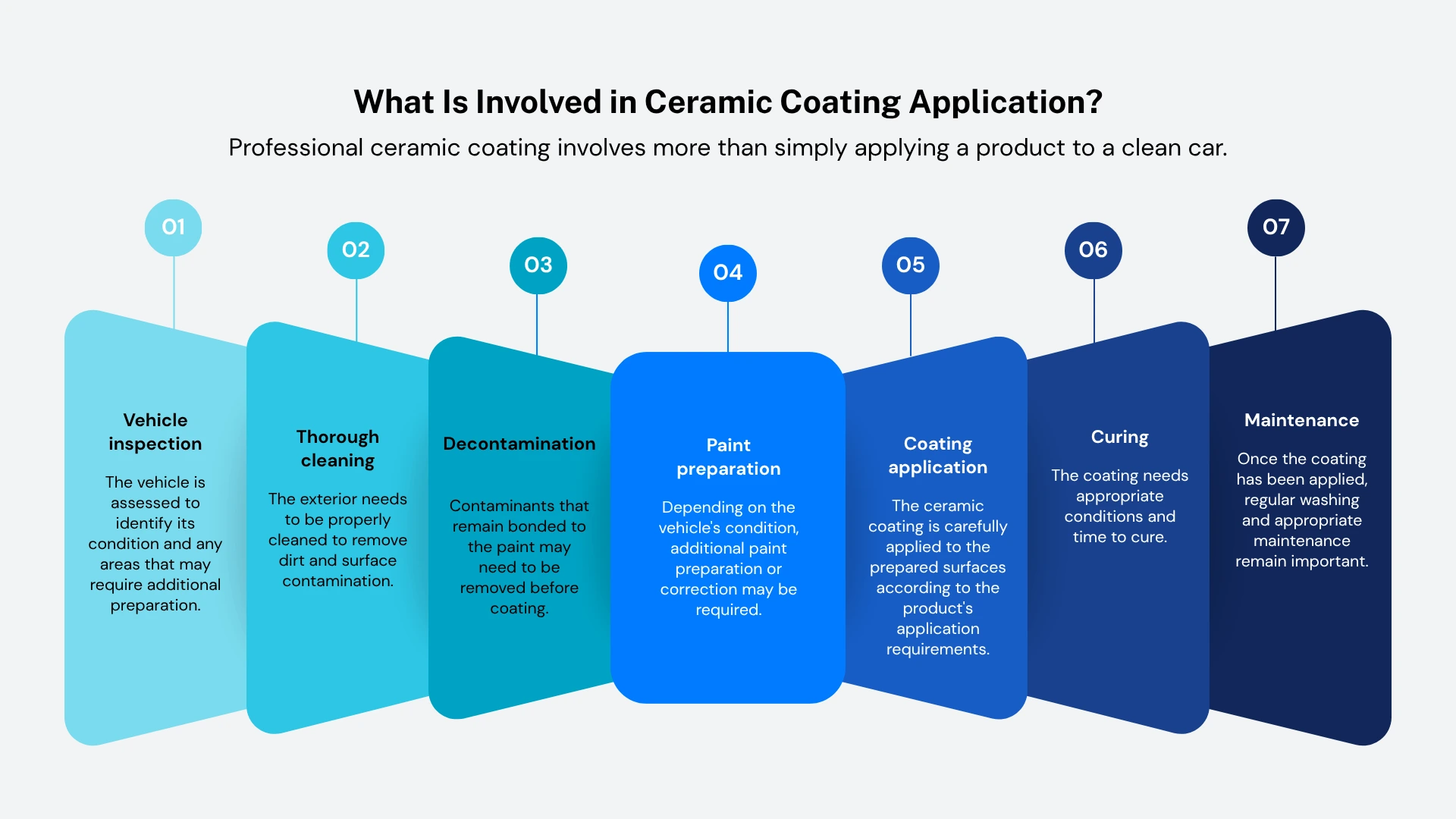
What Is Involved in Ceramic Coating Application?
Professional ceramic coating involves more than simply applying a product to a clean car.
1. Vehicle inspection
The vehicle is assessed to identify its condition and any areas that may require additional preparation.
2. Thorough cleaning
The exterior needs to be properly cleaned to remove dirt and surface contamination.
3. Decontamination
Contaminants that remain bonded to the paint may need to be removed before coating.
4. Paint preparation
Depending on the vehicle’s condition, additional paint preparation or correction may be required.
5. Coating application
The ceramic coating is carefully applied to the prepared surfaces according to the product’s application requirements.
6. Curing
The coating needs appropriate conditions and time to cure.
7. Maintenance
Once the coating has been applied, regular washing and appropriate maintenance remain important.
This preparation process is one of the reasons professional ceramic coating is different from simply applying a wax or spray product at home.
Ceramic Coating vs Wax
Ceramic coating and traditional wax serve similar broad purposes but use different technologies and have different characteristics.
Wax creates a protective layer over the paint but generally has a shorter service life.
Ceramic coating is designed to chemically bond with the prepared surface and provide longer-lasting protection.
The choice depends on the owner’s priorities, budget, vehicle and maintenance expectations.
For someone who enjoys regularly applying wax and maintaining their vehicle themselves, wax may be suitable.
For someone looking for a longer-term protective treatment and hydrophobic properties, ceramic coating may be worth considering.
Ceramic Coating vs Paint Protection Film
Ceramic coating and paint protection film are also different products.
Ceramic coating is a liquid-applied protective layer.
Paint protection film is a physical film applied over selected areas of the vehicle.
PPF can provide protection against certain forms of physical impact that ceramic coating cannot.
Ceramic coating is more focused on surface protection, water repellency and easier maintenance.
Some vehicle owners may choose one or the other depending on their priorities, while others may use different forms of protection together.
Why Professional Preparation Matters
The condition of the paintwork underneath a ceramic coating matters.
A coating does not hide every existing defect.
If the paint contains:
- Swirl marks
- Scratches
- Oxidation
- Water spotting
- Contamination
- Paint defects
these may need to be addressed before the coating is applied.
Applying a coating over poorly prepared paint can lock in an undesirable finish.
Professional preparation allows the surface to be assessed before protection is applied.
This is particularly important for used vehicles.
A vehicle does not necessarily need to be brand new to receive ceramic coating, but its paintwork needs to be appropriately prepared.
How Should You Maintain a Ceramic Coated Vehicle?
Ceramic coating reduces some of the work involved in keeping a vehicle clean, but it does not eliminate maintenance.
A ceramic coated vehicle should still be washed regularly.
Good maintenance practices include:
- Washing the vehicle regularly
- Removing bird contamination promptly
- Using suitable car-care products
- Avoiding aggressive cleaning methods
- Using clean washing equipment
- Drying the vehicle appropriately
- Following the coating manufacturer’s maintenance recommendations
Regular maintenance helps keep the coating performing as intended.
Ceramic Coating for Australian Conditions
Australian vehicles can be exposed to demanding environmental conditions.
Depending on where you live, your vehicle may encounter:
- Strong sunlight
- High temperatures
- Dust
- Road grime
- Coastal salt
- Bird contamination
- Tree sap
- Insects
- Heavy rain
- Urban pollution
This makes exterior protection a relevant consideration for many Australian vehicle owners.
The exact requirements will depend on where and how the vehicle is used.
A vehicle regularly parked outdoors near the coast may have different protection and maintenance needs from a vehicle kept in a garage and driven occasionally.
Ceramic Coating for Cars, SUVs and EVs
Ceramic coating can be considered for a wide range of modern vehicles.
Australia’s Detailing Group’s detailing services can cater to:
- Hatchbacks
- Sedans
- SUVs
- 4WDs
- Utes
- Performance cars
- Luxury vehicles
- Electric vehicles
The correct preparation and coating approach depends on the individual vehicle and the condition of its surfaces.
Larger vehicles can also benefit from professional preparation because there is more exterior surface area to clean, decontaminate and protect.
Why Choose Australia’s Detailing Group?
Australia’s Detailing Group provides mobile vehicle detailing services across its Australian franchise network.
The mobile model means customers can arrange detailing at a suitable location rather than necessarily taking their vehicle to a traditional workshop.
Australia’s Detailing Group’s services extend beyond standard car detailing to include ceramic coatings, caravans, motorhomes, boats and motorcycles.
This broader experience is useful for customers who own multiple types of vehicles.
For example, an owner may have:
- A daily car
- An electric vehicle
- A caravan
- A boat
- A motorcycle
Each vehicle has different surfaces and maintenance requirements, but professional detailing can form part of the overall care routine.
Frequently Asked Questions About Ceramic Coating
What is ceramic coating?
Ceramic coating is a liquid protective treatment applied to prepared vehicle surfaces. It creates a durable protective layer designed to provide hydrophobic properties and help protect paintwork from certain environmental contaminants.
Can electric vehicles be ceramic coated?
Yes. Electric vehicles can be professionally cleaned, detailed and ceramic coated. The coating is applied to suitable exterior surfaces such as painted panels. It does not involve treating the vehicle’s high-voltage battery or electrical drivetrain.
Does ceramic coating protect against scratches?
Ceramic coating can provide a degree of surface protection but does not make paintwork scratch-proof. It cannot prevent all scratches, stone chips or physical damage.
Does ceramic coating stop bird droppings from damaging paint?
Ceramic coating can make contaminants easier to remove and can provide an additional protective layer. Bird droppings should still be removed as soon as practical because no coating makes paintwork immune to contamination.
Does a ceramic coated car still need washing?
Yes. Ceramic coating does not remove the need for regular vehicle washing. Proper maintenance is important for keeping the coating performing as intended.
Is ceramic coating suitable for older cars?
Yes. Older vehicles can be suitable for ceramic coating if their paintwork can be properly prepared. Depending on the condition, paint correction or other preparation may be recommended before the coating is applied.
Is ceramic coating better than wax?
They are different types of protection. Ceramic coating is designed to provide longer-lasting protection and hydrophobic properties, while wax generally provides shorter-term protection. The right option depends on the vehicle owner’s requirements.
Can Australia’s Detailing Group ceramic coat an EV?
Yes. Australia’s Detailing Group can detail electric vehicles and provide ceramic coating for suitable exterior surfaces. The vehicle should be assessed before the service so the appropriate preparation and coating process can be determined.
Is Ceramic Coating Right for Your Vehicle?
Ceramic coating can be a useful option for vehicle owners who want to add a protective layer to their paintwork, improve water repellency and make regular cleaning easier.
It can be suitable for new cars, used vehicles, SUVs, 4WDs, performance vehicles and electric vehicles.
However, it is important to have realistic expectations.
Ceramic coating does not make a vehicle scratch-proof or eliminate the need for maintenance. The quality of the result also depends heavily on proper surface preparation and application.
If you are considering ceramic coating, Australia’s Detailing Group can assess your vehicle and explain the available options.
Want to protect your vehicle’s paintwork?
Contact your local Australia’s Detailing Group team to discuss ceramic coating for your car, SUV, 4WD or electric vehicle.